Visual clues your pool or spa is losing water
Not every water level drop means a leak. On a warm day in San Diego, evaporation alone can lower a pool by a quarter-inch or more. Spas run hot and lose water even faster. But when the water keeps dropping day after day, or when you see odd patterns around the equipment, something else is going on. Learning to read the visual signs can save you from a larger repair bill and keep your pool or spa healthy. Here is what to look for.
Check the water level after 24 hours of normal operation
The simplest test costs nothing and takes almost no time. Turn off any auto-fill device, mark the water level at the skimmer with a piece of tape or a grease pencil, and run the pump on its usual cycle for a full day. If the water drops more than half an inch over 24 hours in mild weather, you likely have a leak. In very hot or windy conditions, give it a second day before you worry. A consistent drop that matches the weather is normal; a drop that keeps going after the weather changes points to a plumbing or shell issue.
Look at the skimmer and the waterline tiles
The skimmer is the rectangle opening at the side of the pool where water is pulled into the filter system. When a pool is leaking on the suction side, air can get pulled into the pump, and you might see small bubbles returning through the jets. But before you get to that, look at the waterline tiles. If the water level has fallen below the skimmer opening, the pump will start sucking air, and the skimmer itself may show a dry ring of calcium or debris. A skimmer that is dry for hours at a time is a sign that the leak is somewhere between the skimmer and the pump, or that the pool is losing water faster than the pump can pull it in.
Inspect the pump and filter area for damp spots
Walk around the equipment pad and look at the ground. A puddle under the pump, a wet patch near the filter gauge, or a constant drip from a valve means you have a leak above ground. These are usually easy to fix - a new gasket or a tightened fitting - but if the water is also coming out of the ground near the plumbing lines, you may be dealing with a buried pipe. The pump lid O-ring is a common culprit. When it wears out, air gets in and water weeps out. Check the lid for cracks and the O-ring for flat spots. If the ground around the pump is always damp, have a professional inspect the suction-side plumbing.

Watch the spa water level when the spa is off
Spas leak differently than pools because they are smaller and the water is hotter. If the spa is separate from the pool and the water level drops more than an inch overnight when it is not running, there is a leak somewhere in the spa shell, the jets, or the circulation piping. A spa that shares water with the pool - a spillover spa - will show a drop in the pool water as well. Look at the spa jets while the spa is off. If water trickles out of a jet even when the pump is not running, the check valve on that line has failed and water is siphoning back into the spa from the pool. That can look like a leak but is actually a plumbing crossover.
Examine the main drain and return lines
The main drain at the deep end is often the hardest place to see. If the pool is losing water and you cannot find any wet spots on the equipment pad, the leak may be in the underground return lines or the main drain pipe. One visual clue is a sudden change in water clarity. When a return line cracks, dirt can be sucked into the pipe, and the water near that return may look cloudy or have a stream of fine bubbles. Another clue is a depression in the soil or a crack in the deck above a buried pipe. If the deck is settling or you see a hairline crack running toward the pool, water is probably washing out the soil underneath. That kind of leak needs professional detection equipment, but the visual sign is the ground itself.
Look at the pool light housing
Pool lights are sealed fixtures, but the seal can fail over time. When water gets into the light niche, it can leak into the conduit and then into the ground. You might not see a puddle, but the light itself may show moisture inside the lens - a foggy look or tiny water droplets. If the light is on and you see bubbles inside the lens, that is a clear sign the seal is broken. A leak around a light fixture is a job for a qualified technician because it involves electrical safety. Do not reach into the niche or attempt to remove the light yourself. Note the foggy lens and call a professional.
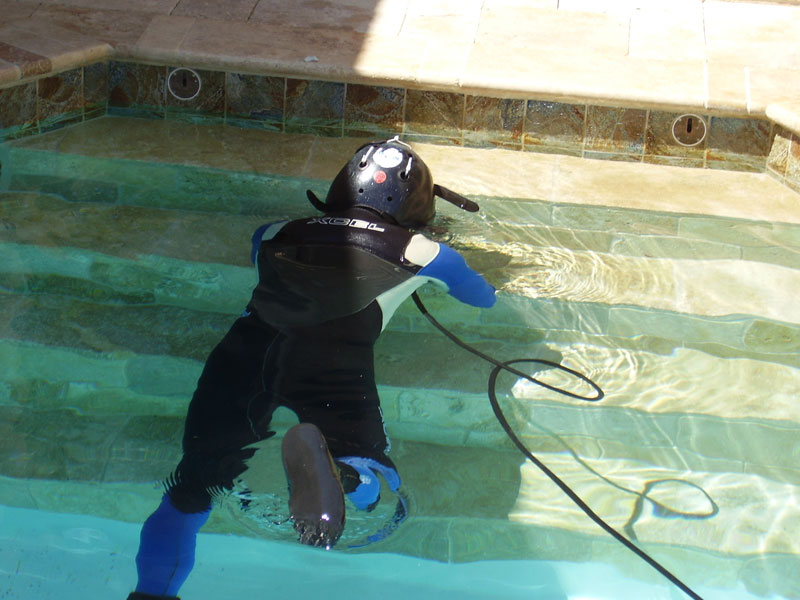
Check the spa jets and the blower line
Spa jets have small gaskets that can fail. When a jet leaks, water may dribble from the jet opening even when the spa is off. Another common spa leak is the blower line. If your spa has an air blower for the jets, the line that carries air to the spa can crack underground. The visual sign is a patch of wet or unusually green grass directly above the blower line path. If the spa has a raised beam or a spillway, check the seal between the spa and the pool. A separation there can cause a slow leak that only shows when the spa is full and the pool is at a lower level.
Use the bucket test to confirm a leak
If you have done the visual checks and still are not sure, the bucket test is a reliable way to separate evaporation from a real leak. Fill a five-gallon bucket with pool water to the same level as the pool water. Set it on a step of the pool so the bucket is partly submerged. Mark the water level inside the bucket and the pool water level on the outside of the bucket. Run the pump normally for 24 hours. If the pool water drops more than the water inside the bucket, you have a leak. This test works because the water in the bucket evaporates at the same rate as the pool water. Any extra drop is lost through a crack, a fitting, or a pipe.
When to call a professional
Most of the signs described here are easy to spot with a careful walk around the pool and equipment. But finding the exact location of a leak often requires pressure testing, dye testing, or electronic listening devices. If the bucket test confirms a leak and you have checked the common spots - skimmer, pump, filter, spa jets, light niche - without finding the source, it is time to bring in a specialist. Swim Care Pool Services provides specialized leak detection for residential and commercial swimming pools, spas, and related plumbing in San Diego. Their team can trace a leak to the exact pipe or fitting without digging up your yard unnecessarily.
A small leak that goes unnoticed for weeks can lead to a much bigger problem. Water that escapes under the deck can wash away the base material, causing the deck to crack or settle. It can also raise your water bill and waste chemicals. Catching a leak early, when it is still just a visual clue, saves you time, money, and the hassle of a major repair. Keep an eye on the water level, check around the equipment, and look at the spa and pool lights regularly. If something looks off, trust your eyes and get it checked. Swim Care Pool Services can help you pinpoint the issue and get your pool or spa back to normal without unnecessary digging.